
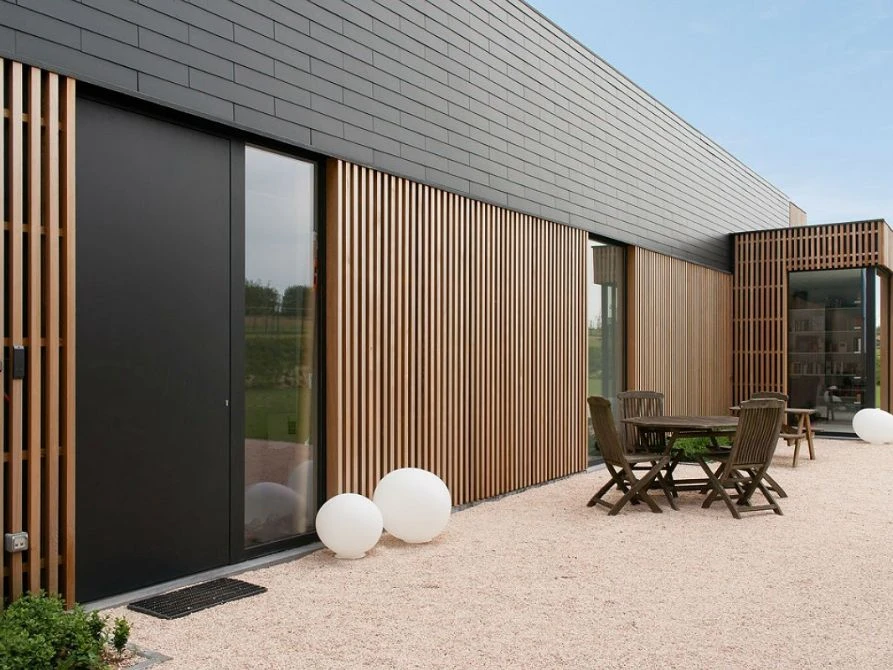
Why Thermally Modified Wood is the Future of Sustainable Architecture & Design
Thermo wood (or thermally modified wood) refers to wood that has undergone a specialized heat treatment process to improve its durability, stability, and resistance to moisture and decay. This eco-friendly process enhances the wood’s natural properties, making it more suitable for outdoor and indoor use without the need for chemical treatments.
Applications of Thermo Wood:
1. Exterior Cladding:
Thermo wood is often used as an exterior cladding material because of its resistance to moisture and decay. It provides a natural, attractive finish to buildings while requiring minimal maintenance.
2. Decking:
Its water resistance and durability make thermo wood perfect for decking. It’s a safer alternative to pressure-treated wood for outdoor use, and it remains stable even in humid or wet conditions.
3. Saunas:
Thermo wood is frequently used in sauna construction because of its stability in high-temperature environments. It doesn’t warp or crack when exposed to heat and humidity.
4. Interior Flooring:
Thermo wood’s dimensional stability and aesthetic appeal make it a great choice for interior flooring, especially in rooms with fluctuating humidity like kitchens or bathrooms.
5. Furniture:
Its improved durability and appearance make thermo wood a popular choice for outdoor furniture. It can also be used indoors for unique and sustainable design elements.
Advantages of Thermo Wood:
1. Chemical-Free: Unlike pressure-treated wood, thermo wood does not contain harmful chemicals, making it safer for humans and the environment.
2. Improved Durability: The heat treatment significantly increases the wood's resistance to decay, insects, and moisture.
3. Dimensional Stability: It is less likely to warp, swell, or crack, even in changing humidity or temperature conditions.
4. Sustainability: The process uses only heat and steam, making thermo wood a more environmentally friendly choice than many chemically treated alternatives.